Few household chores pay off more than scheduling regular air conditioner maintenance.
A well-maintained air conditioning unit runs efficiently, uses less energy and costs less to run. Best of all? A properly serviced system has fewer breakdowns and a longer lifespan.

What You Should Know About Air Conditioner Maintenance
As a homeowner, you can identify and fix common AC issues yourself. But you should leave technical assessments and repairs to properly trained, licensed professionals.
If you’re uncomfortable with performing any of the items on the list below, never hesitate to call a professional.
If you do handle some of the maintenance, always observe safety precautions. And, before you perform any work on your outdoor unit, shut down the power at your electrical box.
And now, for the tips!

1. Examine the Thermostat
This may be the easiest task for air conditioner maintenance. Just check your thermostat to make sure it works properly and keeps your home at the right temperature.
If you have an older, mechanical thermostat, consider upgrading to a smart, programmable model like American Standard HVAC’s Gold 824 smart thermostat.
A smart thermostat allows you to set the temperature higher when no one is home; it doesn’t turn the air conditioner off, just up. And it can cool the house down about 30 minutes before people arrive home for the evening.
By doing this, you’ll always have a comfortable home waiting for you. And you’ll save energy and money by not having your air conditioner running when no one is there.
Want to really maximize savings? Get a smart thermostat that monitors and reports your energy use. Then set daily schedules for cooling your home, test the results, and pocket the savings!
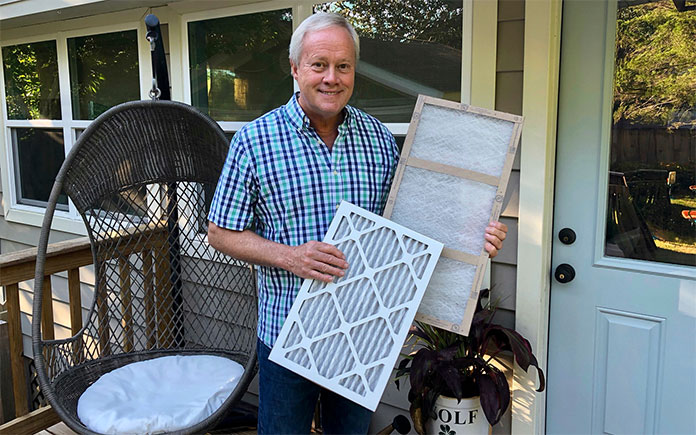
2. Clean or Replace Air Filters
Replacing your air conditioner’s filter (or cleaning it if you have a reusable filter) is one of the most important air conditioner maintenance chores. Do it every month during high-use seasons (like summer and winter) and once during the fall and spring. Air filters can be the source of many air conditioner-related issues and should be considered whenever you are cleaning an air conditioning unit.
You can find the air filter:
- Behind the return air grille on a wall or ceiling in a central room of the house.
- Inside the blower compartment of the air handler or furnace.
- In a slot on the side, bottom or top of your furnace.
When the filter becomes full of dust, dirt and allergen particles, airflow decreases. This makes your system work harder than it should. Air flowing through your system may also become dirtier and dustier, impacting your indoor air quality and triggering allergy and asthma symptoms for those living in the home.
Here’s the solution: Install a high-quality air filter. Inexpensive fiberglass air filters won’t capture smaller particles like pollen, bacteria, and viruses and must be changed every 30 days, or else you could end up having to disinfect your air conditioner.
But a pleated filter, depending upon its MERV rating, can capture those things and more. MERV stands for Minimum Efficiency Reporting Value. Why does the MERV rating matter? The higher the MERV rating, the more airborne pollutants the filter will capture.
Residential filters range from 1 MERV, such as what might be found in a window unit air conditioner, to 12 MERV, which is considered superior for residential use.
If you have family members with allergy and asthma problems; own pets; live in a dusty region; or have other similar indoor air quality challenges, consider upgrading to a filtration system that does more.
For example, American Standard’s AccuClean Whole-Home Air Filtration System removes up to 99.98% of these airborne pollutants and contains a reusable filter.
Installing or cleaning an air conditioner filter couldn’t be easier, and any homeowner can do it. Watch How to Change the Air Filter in Your Home for more information.

3. Clean the Outside Unit
Over time, leaves, dirt and grass clippings build up outside the air conditioner unit; this decreases the system’s capacity and reduces airflow. It’s also why maintenance for the outside unit couldn’t be more important.
First, shut off power to the unit. You can do that at the service disconnect on your outdoor unit or at your home’s main breaker panel.
Then, use a garden hose to gently wash out the debris. Start at the top, with the hose at about a 45-degree angle, and work your way down.
Do not use a power washer — otherwise, you could damage the unit. And take care not to bend or damage the delicate fins on the coil.
Aluminum cooling fins on an air conditioner compressor must be straight for the unit to cool efficiently. If yours aren’t, here’s how to repair bent air conditioner compressor fins — it’s a Simple Solution to a common problem!
While you’re cleaning and making minor repairs on the outdoor unit, go ahead and trim any shrubs or other plants around your air conditioner. This will prevent them from impeding airflow to and from the unit.
4. Check Wiring and Components
Your air conditioner’s internal connections are crucial to its operation. What you don’t know about them could hurt your pocketbook from inefficient cooling, so it’s important to check the outdoor unit’s wiring at least once a year.

With the condenser unit’s power turned off, remove its access panel and look for signs of overheating. For instance, this could include melted insulation on wires and blackened or burned-looking wires.
Also, go ahead and check any electrical connections to make sure they are tight. If you own an electrical test meter, you can check the unit’s capacitors.
If you notice any problems and don’t feel comfortable correcting them yourself, call a local heating and air conditioning expert to do the work.
Of course, if you’re just not comfortable checking these parts yourself, that’s OK! Ask your local HVAC professional to include this in your bi-annual checkup.
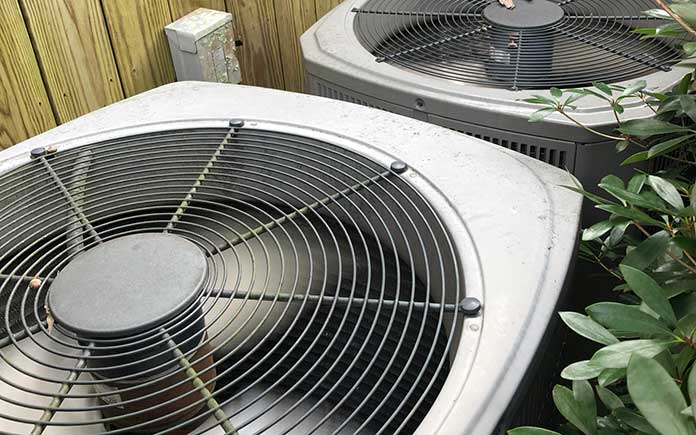
5. Check the Condenser Unit’s Fan
Your air conditioner can’t cool your home very well if the condenser unit’s fan blades are in poor shape. That’s why it’s important to know their condition.
To do this, turn the power off to your air conditioner unit and check the fan mounted on top of the outside condenser unit to make sure it’s still in good shape.
Replace the fan blades if there are any cracks or chips visible in one or more of the blades. You can purchase fan blades online from Amazon and air conditioner supply websites.
But first, make sure the blades fit your condenser unit. Most online stores have a list of compatible systems or will prompt you to type in the condenser’s model number to make sure it’s a match.
Also, if you have an older air conditioner unit, you may need to oil the fan motor bearings regularly.
Of course, if you’re not comfortable with this type of maintenance, just ask your local HVAC professional to include this in your bi-annual checkup.

Call for Professional A/C Maintenance
Proper air conditioner maintenance can keep you comfortable during the hottest days of summer. In addition, it can save you energy and money.
Getting professional air conditioner tune-ups twice a year (once for heating and once for cooling) couldn’t be more important. Your furnace should be checked just before its winter use, and your air conditioner should be checked just before the hot summer months.
Your tune-up professional will lubricate and inspect all system parts for functionality. They’ll replace filters, clean out drain holes, check your refrigerant levels, and so forth.
Read our guide to what HVAC inspection costs to expect.
These routine check-ups are important to make sure your air conditioner is running at optimal performance and to help you avoid pesky air conditioner repair costs in the future.
Most important? Regular check-ups will ensure your air conditioner lasts for as many years as possible.
However, if you find yourself in need of an upgrade, consider a system that will not only meet your family’s comfort needs, but also offers greater peace of mind with energy usage and billing expenses.
The American Standard HVAC’s AccuComfort Variable Speed cooling system is a great option. It’s a highly efficient air conditioner that will provide maximum comfort and can help lower operating costs and energy usage.
Learn more about air conditioners with HVAC basics, presented by American Standard HVAC.