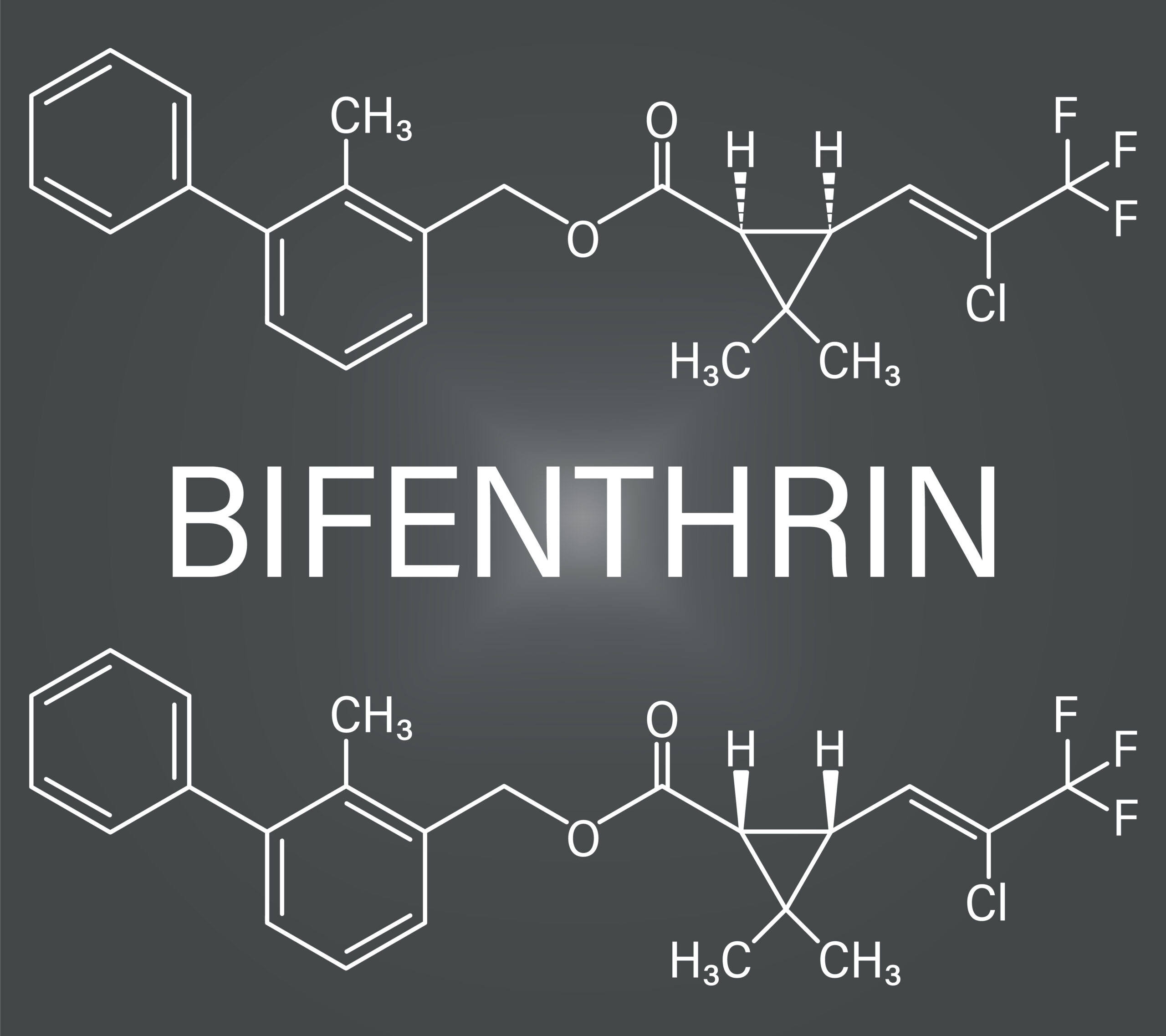
Bifenthrin DIY Quick Facts
Quick Summary:
Bifenthrin is a widely used pesticide best known for it’s long lasting residual killing power, even when applied outdoors. It makes for a great perimiter treatment to treat the outside of your home in either a spray or granular form.
Effective Against:
Most any pest including Ants, Armyworm, Bark Beetles, Bat Bugs, Bed Bugs, Bees, Beetles, Borers, Boxelder Bugs, Brown Dog Ticks, Carpenter Ants, Carpenter Bees, Carpet Beetles, Centipedes, Chinchbugs, Cockroaches, Crickets, Earwigs, Elm Leaf Beetles, Fire Ants, Firebrats, Fleas, Flies, Flour Beetles, Ground Beetles, Gypsy Moths, Indian, Larder Beetles, Leaf Beetles, Meal Moths, Millipedes, Mole Crickets, Pillbugs, Scorpions, Silverfish, Sod Webworm, Sowbugs, Spiders, Stinkbugs, Ticks, Wasps, and more.
Bug Lord Recommended Uses:
- Spreading granules around the foundation of your home in the spring to prevent ants.
- Spraying your yard for ticks and mosquitoes (tall grasses, undersides of leaves and bushes, shaded areas).
Available in:
Liquid concentrates, granules, aerosols (rare), foggers (rare).
Recommended Bifenthrin Products:
Bifen I/T, Talstar XTRA Granules
Alternative Chemicals to Consider:
- Permethrin for a faster killing effect.
- Bifenthrin is one of several synthetic pyrethroid insecticides, designed to mimic insect-killing chemicals from the chrysanthemum flower known as pyrethrins.
- Bifenthrin is considered a pyrethroid – a synthetic version of the natural pyrethrins. Pyrethrins are produced in chrysanthemum flowers, and they have been noted as a powerful insect repellent for decades.
- Bifenthrin is most widely used on agricultural crops. It is commonly applied to almonds, cotton, corn, and pistachios, among other crops.
Bifenthrin Overview
Bifenthrin is one of several synthetic pyrethroid insecticides, designed to mimic insect-killing chemicals from the chrysanthemum flower known as pyrethrins. Bifenthrin is a very effective general insecticide against most insects. However, insects can develop bifenthrin resistance and many non-target species can be impacted.
There are many uses for bifenthrin, which are generally considered safe if you follow the manufacturer’s instructions. These uses include direct spray to kill agricultural pests, granular formulas for repelling and killing ants, and a wide variety of other applications intended to more specifically target pest insects.
This article covers everything you need to know about bifenthrin – including how effective it is, how to use it safely, and what environmental considerations you should take into account!
When Was Bifenthrin Created?
Bifenthrin was first registered in 1985 with the EPA. It was quickly approved as an insecticide and put to use in the agricultural industry. Today, it is still regularly used on corn, pistachios, almonds, and several other important agricultural products. Plus, bifenthrin is the main active ingredient in hundreds of insecticide products available for lawn care and home use.
The natural pyrethrins from the chrysanthemum flower are a powerful insecticide produced by the plant to protect themselves from insects. However, these natural molecules break down very quickly in sunlight. In an effort to make a more photostable molecule, researchers began experimenting with different chemical additions and synthetic versions of pyrethrins. Bifenthrin is one of these experimental pyrethroids that is very photostable – making it much more useful as a commercial product.
What is Bifenthrin?
Since 1985, bifenthrin has been adapted for incorporation into a massive variety of different products. Technically speaking, bifenthrin has a very complex name:
2-methyl-3-phenylphenyl)methyl (1R,3S)-3-[(Z)-2-chloro-3,3,3-trifluoroprop-1-enyl]- 2,2-dimethylcyclopropane-1-carboxylate
This name not only designates the complex arrangement of atoms within this massive molecule, but it also specifies exactly which direction the molecules are facing. This is very important – specifically the (1R,3S) part. According to research, this form of bifenthrin is the most effective at killing insects and is the least toxic version to humans and other mammals. This is the form you will find in all insecticide and repellent products.
In its pure form, bifenthrin is typically a waxy solid, white in color, that emits a slightly sweet odor (though smelling pure bifenthrin is not advised)! Pure bifenthrin can be toxic to humans in small amounts. However, most commercial and consumer products are reduced to less than 10% bifenthrin – making them much safer to handle and apply.
Pesticide Class
Bifenthrin is considered a pyrethroid – a synthetic version of the natural pyrethrins. Pyrethrins are produced in chrysanthemum flowers, and they have been noted as a powerful insect repellent for decades. In the 1960s, researchers started exploring the compounds in the chrysanthemum flower and realized it was the pyrethrins providing the insect-repellent properties.
By 1985, bifenthrin was one of the last synthetic pyrethroids to be synthesized. Bifenthrin was found to be very stable in the sunlight and was not water-soluble. This made it a great prospect for agricultural applications. Like other pyrethroids, bifenthrin is a broad-spectrum insecticide. This means that it is not specific for any one insect species and will affect the entire environment it is applied to.
What Insects Does Bifenthrin Control?
The real question is: what doesn’t bifenthrin control?
Since bifenthrin is not species-specific, it can affect the nervous systems of nearly all insects that come in contact with the chemical. The one notable exception is that most pesticides are ineffective against spiders unless sprayed directly on them. This is because spiders tend to travel higher off the ground than most pests and don’t groom their legs.
Here is a list of some of the most popular insect targets:
- Mosquitos
- Ticks
- Ants
How Does Bifenthrin Work?
Bifenthrin works by interfering with the nervous system of an organism. Bifenthrin binds to proteins on nerve cells that control the flow of ions in and out of the cell. Much like the nerve signal that bifenthrin mimics, this causes the nerve cell to “fire” – effectively sending a signal throughout the insect’s body.
Bifenthrin binds weakly to these proteins, allowing a single bifenthrin molecule to attach, release, and reattach on a new nerve cell. As bifenthrin moves through an insect’s body, many nerve cells are activated in random locations. This essentially causes the insect to have terrible seizures, which eventually lead to death.
Bifenthrin has the same effect on the mammal nervous system – though mammals have an enzyme that can break down bifenthrin into inactive chemicals. This allows mammals to survive a much higher dose of bifenthrin.
Common Uses for Bifenthrin
Bifenthrin is most widely used on agricultural crops. It is commonly applied to almonds, cotton, corn, and pistachios, among other crops. While bifenthrin can potentially be harmful to humans, it is applied at such a low dose that it is considered safe. Plus, it is typically applied well before harvest. This helps ensure that a majority of the bifenthrin has degraded before any agricultural products reach the market.
Bifenthrin has also been adapted to fit the needs of many homeowners and gardeners. There are now over 170 products intended for consumer use that use bifenthrin as an active ingredient. Generally speaking, these products contain an even lower concentration of bifenthrin than agricultural use. However, you should always use caution when handling synthetic pesticides and be sure to follow the manufacturer’s directions explicitly.
Toxicity
While bifenthrin does make an excellent insecticide, it is also very toxic to a wide variety of organisms. If not used properly, bifenthrin can cause burning of the skin, airway irritation, and a variety of digestive system issues in humans and pets!
Mammals
Pets like cats and dogs will twitch, flick their paws, drool, and display a large number of other symptoms if they are exposed to a high dose of bifenthrin. While the product is generally safe if used as directed, you need to take extra care not to overexpose your animals or your family. Do not apply bifenthrin directly to animals, and try to wait for any sprayed application to dry before letting children or animals back into the area.
Interestingly, researchers have found that minor differences in bifenthrin molecules can have a huge effect on its toxicity. One version of bifenthrin (1S-cis-bifenthrin) is 3-4X more toxic to humans and other mammals. The version used as an insecticide – 1R-cis-bifenthrin – is 300 times more effective at killing insects and is much less toxic to mammals.
Aquatic Animals
Multiple studies have shown that bifenthrin is very toxic to aquatic animals. Crustaceans – everything from crabs to crawfish – are massively impacted because they are very closely related to insects. However, research has shown that it is not only animals closely related to insects that are affected.
In fact, several studies have shown that even small amounts of bifenthrin can affect everything from the tiniest microscopic organisms to the largest fish in an aquatic ecosystem. Bifenthrin directly affects the gills of many fish species – effectively leading to suffocation underwater.
If you have a pond, lake, or stream with fish and aquatic wild life nearby, be sure to keep pesticides away from them.
Birds
Few studies have tied bifenthrin directly to any adverse effects in birds. However, it should be noted that researchers have called for more study in this area – as birds may be affected by fish or insects they eat that are contaminated with bifenthrin.
Bees
Since bees are an insect, they are very much affected by bifenthrin. Studies have shown that bees can be affected by as little as 3 mg/L of bifenthrin. Since most manufacturers recommend a concentration somewhere between 20-100 mg/L, this is more than enough to kill any bee that comes into contact. Furthermore, it has been shown that bees can be affected at every stage of their lives – from egg to adult.
So, if you are concerned about your local pollinator population, you should stay away from applying bifenthrin around any flowering vegetation that bees pollinate. You may also want to try a pesticide with a much weaker residual than bifenthrin.
Carcinogen Status
Though bifenthrin has been labeled as a “possible carcinogen” by the EPA, more research in humans needs to be done. Research in mice and rats has yielded conflicting results – some studies show that bifenthrin may contribute to cancer, and some studies show that it is likely safe at low doses.
Bifenthrin Study Summaries
Bifenthrin was first registered with the EPA in 1985, and since then, a tremendous amount of research has been done on different aspects of the chemical. Here, we break down some of the most important studies!
Meta-Reviews
Bifenthrin has been around long enough that there are several meta-reviews on the chemical. These reviews cover everything from the mode of action to ecotoxicology, though there are several important points made in each review.
The Encyclopedia of Toxicology entry on bifenthrin covers some very important aspects of the insecticide. The article notes that bifenthrin targets the central nervous system, causing repetitive nerve activity. This leads to hyperexcitation and death – a condition avoided in mammals because of our ability to break down the chemical when it enters our bodies.
In fact, researchers have found that the toxicity of bifenthrin can be as low as 42.5 mg/kg body weight! In an average 80 kg human, this means you would only need to consume around 3.4 grams of pure bifenthrin to receive a toxic dose. A typical “consumer” version of bifenthrin contains 96 ounces of 7.9% bifenthrin – nearly 214 grams. So, in their concentrated form, many products should be considered very toxic!
Always handle pesticides with care and be sure to keep them out of reach from children and animals.
The Hayes’ Handbook of Pesticide Toxicology also covers bifenthrin. Authors of this article note that bifenthrin has been found to be responsible for the loss of aquatic diversity in several California streams. While bifenthrin is not a water-soluble product, it is assumed that bifenthrin makes it to the water by hitching a ride on soils washing out of fields. Though this has been mostly tied to professional/agricultural use, though lawn care regimens including bifenthrin may be playing a minor role.
The authors also found that bifenthrin is the most persistent soil pesticide in use today.
Usage and Efficacy
Many other studies cover specific aspects of bifenthrin, including its normal usage and effectiveness in various scenarios.
Bifenthrin appears to be very effective as mosquito control. One study focused on treating mosquito nets with bifenthrin and found that the insecticide works very well and lasts a very long time from a single application.
Researchers found that not only did bifenthrin kill mosquitos and inhibit blood-feeding, but even pyrethroid-resistant mosquitos were affected by bifenthrin!
Another study found that bifenthrin could be used to effectively kill mosquitos around the yard, garden, and home. Bifenthrin is most effectively applied to shady areas and areas protected from rain because mosquitoes like to rest here during the day.
One study found that bifenthrin can still be effective after 35 days. Interestingly, researchers found that mosquitos prefer certain plant species over others. Spraying these plants with bifenthrin killed more mosquitos, so you may want to do some observations on where mosquitos actually hide on your property before you apply bifenthrin.
As a granular formula, bifenthrin can also be useful in repelling and killing ant colonies. Granular bifenthrin is made to soak into the soil, mulch, and grass to provide longer residual killing effects on pests. The above study found that a 2-meter spread of bifenthrin granules around the foundation of a structure provided 100% of fire ants from entering the property for 7 weeks, and was effective for up to 15 weeks!
Bifenthrin has been found to be effective against a wide variety of other insects including leafhoppers, tomato/potato psyllids, and cabbage maggots. That being said, bifenthrin was not the most effective for any of these insects and was slightly outperformed by other insecticides, depending on the insect species tested. This is not surprising since bifenthrin is considered a non-specific, broad-spectrum insecticide. Bifenthrin does seem to have a longer residual than most pesticides, though.
Toxicity, Environmental Effects, and Insect Resistance
Though bifenthrin has been shown to be very effective against a number of insect species, other studies have shown that it is a highly toxic compound, has very negative environmental effects, and insects can develop resistance in as little as 2 years. You can avoid developing pesticide-resistant insects by swapping out what you spray each year.
Research specifically on bees has shown that bifenthrin is not bee-friendly! Bifenthrin can affect bees at very low doses – doses well below the concentration that bifenthrin is typically applied. If you apply bifenthrin to the flowering plants in your garden or near a water source used by bees, there is a good chance they will be affected. Bifenthrin can stunt bee growth and lead to the premature death of a hive.
Unfortunately, bees are not the only off-target species that bifenthrin users need to worry about. Bifenthrin has been shown to be devastating to fish and aquatic animal populations. Specifically, researchers have found that bifenthrin causes deformities in baby zebrafish. Plus, it has also been shown that rainbow trout exposed to bifenthrin have liver damage and gill damage that can lead to death with doses as low as 1 microgram per liter. Negative effects have also been shown in carp and tilapia, suggesting that all fish will be negatively affected by even tiny doses of bifenthrin!
While the effects are not nearly as drastic and take much higher doses, bifenthrin has been shown to negatively affect human blood cells. Other research has suggested that if used properly, very little bifenthrin actually makes it to the human system on agricultural products. Specifically, only 1.5-14% of the original bifenthrin concentrated made it into tea made from bifenthrin-treated tea leaves. Plus, if bifenthrin is applied well before harvest, most of it will break down before it ever reaches a consumer. So, there is a minimal chance that anyone could get bifenthrin poisoning simply from eating goods treated with bifenthrin as they grew.
One of the most concerning aspects of bifenthrin is that it is so effective, insects can quickly develop a resistance to it. Like other pyrethroid products, researchers have found that insect population can develop a significant resistance to bifenthrin in as little as 2 years. One study on mite populations found that 2 years after the first dose of bifenthrin, the same dose only killed 10% of the population. Researchers had to increase the dosage by 109 times to make it effective 2 years later. This brings up serious concerns over how effective bifenthrin will be over the long-run.
Is Bifenthrin Banned by Any Countries?
For a short time, bifenthrin was banned for use in the European Union because of its possible carcinogenic effects and its unintended environmental consequences. Since 2009, however, bifenthrin has been reinstated, though it’s use is more closely monitored and it is not available in as many consumer forms as are allowed in the United States.
The United States and Canada both allow bifenthrin in commercial and residential applications.