Expert Advice On Improving Your Home
Expert Advice On Improving Your Home
Please enter a valid 5-digit zip code!
Written By David Cusick
Last Updated April 2024
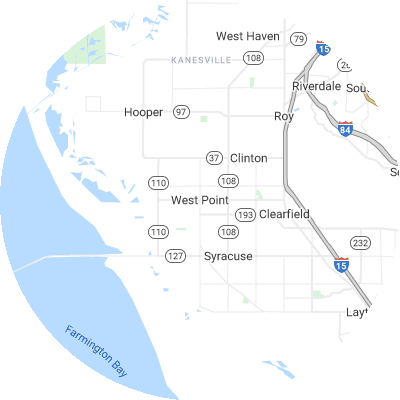
Solar is one of the most easily accessible forms of renewable energy for West Point residents. Switching to solar energy can reduce your monthly energy expenses and shrink your carbon output. Before you begin the process, you want to make sure you find a trustworthy installer. Luckily, we’ve analyzed local solar providers and created a guide to the best solar companies in West Point. These proven and dependable providers are reliable options known for their quality services.

Reliable customer support
Informative resources
Clear pricing policy
Free quotes
Services Offered
Clear pricing policy
Informative resources
Reliable customer support
Services Offered
Informative resources
Reliable customer support
Free quotes
Clear pricing policy
Services Offered
Informative resources
Reliable customer support
Clear pricing policy
Prompt service delivery
Services Offered
Informative resources
Reliable customer support
Clear pricing policy
Free quotes
Services Offered
Clear pricing policy
Informative resources
Free quotes
Reliable customer support
Services Offered
Reliable customer support
Free quotes
Clear pricing policy
Informative resources
Services Offered
Reliable customer support
Clear pricing policy
Free quotes
Prompt service delivery
Services Offered
Free quotes
Reliable customer support
Informative resources
Clear pricing policy
Services Offered
Reliable customer support
Informative resources
Clear pricing policy
Services Offered
Today's Homeowner looks at dozens of datapoints on solar companies to come up with our data-driven rankings. It's not possible for a company to pay for preferential treatment in our rankings. We look at the following key factors in determining who should top our list:
Going solar can be a great way to reduce electricity costs and help the environment by reducing your carbon footprint using renewable energy. Here are some key factors to consider when evaluating if a solar installer is trustworthy.
Hiring a licensed solar installer is critical. This helps ensure that the work is done correctly using the most up-to-date installation methods. If a solar energy system in Utah won't hook up to a utility, the state exempts its installation from licensing requirements. For other jobs, solar contractors must hold license S202, a specialty classification from the Utah Division of Occupational and Professional Licensing.
Check review sites like Google Reviews, TrustPilot, and the Better Business Bureau (BBB) to see feedback from past customers on local solar companies. Detailed reviews can help you evaluate a company's reliability and customer service. Use caution with companies that have no reviews or mostly negative ones.
Get free, detailed quotes from at least three solar companies. The quotes should outline all costs and identify the solar parts included. Looking at several quotes can help you find the best value for your budget.
High-quality solar installations should have robust workmanship and performance guarantees. The workmanship warranty covers any installation issues like poor alignment, cracks in the panels, or poor wiring. The output guarantee ensures an energy generation baseline. Strong warranties reflect a solar provider's confidence in its installations.
Solar energy can help lower your electricity costs in the long run. When considering solar panel's cost and value, be sure to weigh these considerations.
In West Point, solar panels cost an average of $3,290 per kilowatt, with an average system size of 5.3 kilowatts. The typical West Point homeowner spends $12,120 on their solar array after federal tax refunds. An estimate from a local provider will factor in additional information based on your desired system's capacity, panel type, size, and required preliminary work. In some cases, homeowners may prefer to lease solar panels to reduce upfront costs.
Incentive Amount:
Commercial wind, geothermal electric, and biomass systems 660 kW or greater, and solar PV systems 2 MW or greater: 0.35¢/kWh ($0.0035/kWh) for 4 years
Other commercial technologies and commercial wind, geothermal electric, solar PV, and biomass systems smaller than 600 kW: 10% of installed cost
Photovoltaic systems between 660 kW and 2 MW: May choose either 0.35¢/kWh ($0.0035/kWh) for 4 years or 10% of installed cost
Incentive Amount:
Residential: 25%
Commercial wind, geothermal electric, and biomass systems 660 kW or greater 0.35¢/kWh ($0.0035/kWh) for 4 years
Other commercial technologies and commercial wind, geothermal electric, and biomass systems smaller than 660 kW: 10% of installed cost
Solar photovoltaic systems 2 MW or greater: 0.35¢/kWh ($0.0035/kWh) for 4 years
Solar photovoltaic systems smaller than 660 kW: 10% of installed costSolar photovoltaic systems between 660 kW and 2 MW: May choose either 0.35¢/kWh ($0.0035/kWh) for 4 years or 10% of installed cost
Incentive Amount:
Ductless Heat Pumps: Up to $1,700
Electronically Commutated Motors: Up to $100
Evaporative Coolers: Up to $200
Heat Pumps: up to $750
Ground Source Heat Pumps: up to $2,500
Rooftop Heat Tape Timer: up to $100
Room Air Conditioners: Up to $20
Smart Thermostats: $50
Whole House Ventilation Fans: up to $125
Manufactured Homes Duct Sealing: Free service available
Manufactured Homes Ductless Heat Pumps: Up to $1,300
Lighting: Special pricing at certain retailers
Heat Pump Water Heaters: up to $550
Insulation: Up to $0.10/sq.ft
Generally speaking, a solar photovoltaic (PV) system can be used to power any household appliance or system that uses electricity. In the smallest case, you can use a solar water heater.
With home solar PV, you can recoup the cost of the system over time, lower your home's carbon footprint, and gain additional energy independence.
Of course. The grid in West Point already uses a large share of renewable energy sources, and you may be able to sell your excess generated energy to your utility for additional cost savings.
Your payback period is the time to achieve an ROI on your solar panels. It will vary based on the rate your utility charges per kilowatt of power, their rated capacity, and the average sunlight in your area. West Point has extremely high daily sunlight levels, so you could recoup your investment in as little as 11.6 years per 5 kW of rated capacity.
The answer ultimately depends on your specific situation. You can take advantage of a federal tax credit of up to 30% of the system's cost, as well as state or local incentives depending on where you are. As for insurance, you'll need to notify your insurer about your new solar panels. Your premium may increase due to added property values, but you'll have peace of mind if a covered event happens to the system.
Some frequently-used types of home solar panels in West Point include thin-film, monocrystalline and polycrystalline. Monocrystalline panels are balanced and efficient, while polycrystalline and thin-film panels pair good performance with greater upfront value. Ask your local provider about which solar panels they work with.
Solar panels can be more efficient than other forms of renewable energy. They have inexpensive upkeep and today's systems can generate and manage energy under more conditions.