Expert Advice On Improving Your Home
Expert Advice On Improving Your Home
Please enter a valid 5-digit zip code!
Written By David Cusick
Last Updated February 2024
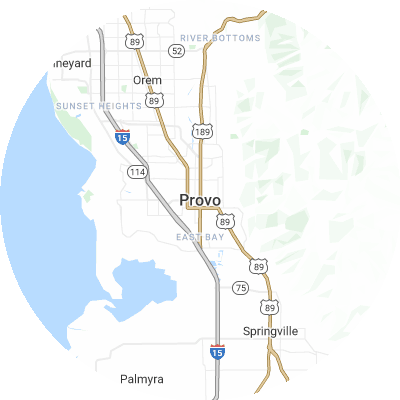
Rooftop solar is one of the most easily accessible forms of renewable energy for Provo residents. Adopting solar energy can help you save money and lower your carbon footprint, but you want to make sure you find a trustworthy installer. Luckily, we've reviewed the options and assembled a guide to the best and most reputable solar installation companies in Provo.

Informative resources
Reliable customer support
Clear pricing policy
Prompt service delivery
Free quotes
Services Offered
Informative resources
Clear pricing policy
Free quotes
Reliable customer support
Services Offered
Reliable customer support
Informative resources
Clear pricing policy
Free quotes
Services Offered
Informative resources
Reliable customer support
Clear pricing policy
Services Offered
Clear pricing policy
Informative resources
Reliable customer support
Free quotes
Services Offered
Informative resources
Reliable customer support
Free quotes
Services Offered
Reliable customer support
Prompt service delivery
Informative resources
Clear pricing policy
Free quotes
Services Offered
Reliable customer support
Informative resources
Clear pricing policy
Free quotes
Services Offered
Reliable customer support
Informative resources
Free quotes
Clear pricing policy
Services Offered
Free quotes
Clear pricing policy
Informative resources
Reliable customer support
Services Offered
Today's Homeowner looks at dozens of datapoints on solar companies to come up with our data-driven rankings. It's not possible for a company to pay for preferential treatment in our rankings. We look at the following key factors in determining who should top our list:
Installing solar panels can cut your electricity costs and benefit the planet by reducing your carbon footprint. When deciding if a solar provider is the best option for you, consider these key factors.
Make sure you hire a licensed solar installer. This ensures that the work is done properly using current best installation practices. If a solar energy system in Utah won't hook up to a utility, it's exempt from contractor licensing requirements. For other jobs, solar contractors must hold license S202, a specialty certification from the Utah Division of Occupational and Professional Licensing.
Check review sites like the Better Business Bureau (BBB), Google Reviews, and TrustPilot to see feedback from past customers about local solar companies. Detailed reviews can help you evaluate a company's dependability and level of service. Use caution with providers that have very few reviews or mostly negative ones.
Contact three to five solar companies to get free, detailed quotes. Quotes should clearly explain all costs and specify the exact solar components included. By comparing multiple quotes, you can identify the most cost-effective option for you.
Top-notch solar installations should have strong workmanship and performance warranties. A workmanship guarantee covers installation defects, such as poor wiring, poor alignment, or cracks in the panels. A performance warranty ensures a minimum energy output. Comprehensive guarantees indicate that a solar company believes in its work.
Solar energy can help reduce your energy expenses over time. Be sure to evaluate these aspects when judging the cost and value of solar panels.
In Provo, solar panels cost an average of $3,290 per kilowatt, with an average system size of 5.2 kilowatts. The typical Provo homeowner spends $11,996 on their solar array after federal tax refunds. An estimate from a local provider will factor in additional information reflecting your desired system's size, capacity, required preliminary work, and panel type. In some cases, homeowners may prefer leasing solar panels to reduce upfront costs.
Incentive Amount:
Commercial wind, geothermal electric, and biomass systems 660 kW or greater, and solar PV systems 2 MW or greater: 0.35¢/kWh ($0.0035/kWh) for 4 years
Other commercial technologies and commercial wind, geothermal electric, solar PV, and biomass systems smaller than 600 kW: 10% of installed cost
Photovoltaic systems between 660 kW and 2 MW: May choose either 0.35¢/kWh ($0.0035/kWh) for 4 years or 10% of installed cost
Incentive Amount:
Residential: 25%
Commercial wind, geothermal electric, and biomass systems 660 kW or greater 0.35¢/kWh ($0.0035/kWh) for 4 years
Other commercial technologies and commercial wind, geothermal electric, and biomass systems smaller than 660 kW: 10% of installed cost
Solar photovoltaic systems 2 MW or greater: 0.35¢/kWh ($0.0035/kWh) for 4 years
Solar photovoltaic systems smaller than 660 kW: 10% of installed costSolar photovoltaic systems between 660 kW and 2 MW: May choose either 0.35¢/kWh ($0.0035/kWh) for 4 years or 10% of installed cost
Incentive Amount:
Ductless Heat Pumps: Up to $1,700
Electronically Commutated Motors: Up to $100
Evaporative Coolers: Up to $200
Heat Pumps: up to $750
Ground Source Heat Pumps: up to $2,500
Rooftop Heat Tape Timer: up to $100
Room Air Conditioners: Up to $20
Smart Thermostats: $50
Whole House Ventilation Fans: up to $125
Manufactured Homes Duct Sealing: Free service available
Manufactured Homes Ductless Heat Pumps: Up to $1,300
Lighting: Special pricing at certain retailers
Heat Pump Water Heaters: up to $550
Insulation: Up to $0.10/sq.ft
A solar photovoltaic (PV) array can generate power to run any electric system or appliance in your home. More specifically, you can install a solar water heating system.
There are many advantages of home solar energy. You can save money, reduce emissions, and raise your property values. With the right storage equipment, solar panels can also provide you with further energy independence and offer some protection from power outages.
It depends on your home's location and the kind of panels you plan to use. Provo can experience long, hard winters, so we recommend installing your system in the spring months to maximize your generation for the year.
Absolutely. The grid in Provo already uses a large share of renewable energy sources, and you may be able to sell your excess generated energy to your utility for additional cost savings.
Generally speaking, your energy bills will significantly decrease after you install solar panels. This is because you're using the energy you generate for free rather than buying it from your power company. In Provo, the average amount someone can save is $965 per year. With net metering programs offered by many utilities, you could ultimately make a profit from your system when your payback period is done.
While solar energy is an ideal option for many, it might not be ideal for homeowners in wet, dark areas. In these cases, a contractor might recommend other forms of renewable energy, such as wind or geothermal power, as a primary source. It is also important to speak to a qualified installer to determine if their solar system is compatible with the climate and environment of your area. Even if you choose a different form of renewable energy altogether, you'll still help the environment and could still qualify for distributed generation or other money-saving programs.
The answer depends on your specific needs and goals. For a typical home, monocrystalline solar panels are the most efficient for homes in Provo. However, if lowering cost is your top priority, then you could polycrystalline or thin-film solar panels. When you're choosing a contractor, make sure to ask about the brand names and models of solar panels a contractor offers and the benefits and drawbacks of each.