Expert Advice On Improving Your Home
Expert Advice On Improving Your Home
Please enter a valid 5-digit zip code!
Written By David Cusick
Last Updated April 2024
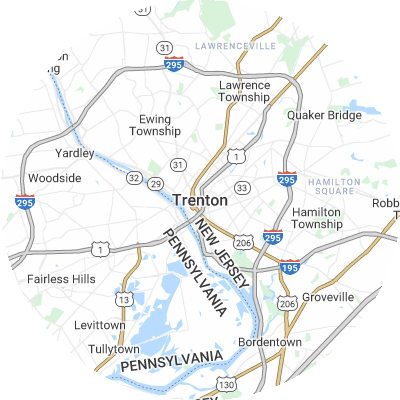
Rooftop solar is one of the most easily accessible forms of renewable energy for Trenton homeowners. Switching to solar energy can lower your monthly energy expenses and decrease your carbon output. Before you begin the process, you want to make sure you find a qualified installer. Luckily, we've reviewed the options and compiled a guide to the best and most reliable solar installation providers in Trenton.


Free quotes
Informative resources
Clear pricing policy
Reliable customer support
Services Offered
Free quotes
Clear pricing policy
Services Offered
Informative resources
Reliable customer support
Clear pricing policy
Free quotes
Services Offered
Reliable customer support
Clear pricing policy
Free quotes
Informative resources
Services Offered
Clear pricing policy
Free quotes
Informative resources
Reliable customer support
Services Offered
Clear pricing policy
Informative resources
Free quotes
Reliable customer support
Services Offered
Free quotes
Reliable customer support
Clear pricing policy
Informative resources
Services Offered
Reliable customer support
Clear pricing policy
Free quotes
Informative resources
Services Offered
Informative resources
Reliable customer support
Clear pricing policy
Services Offered
Informative resources
Clear pricing policy
Services Offered
Today's Homeowner looks at dozens of datapoints on solar companies to come up with our data-driven rankings. It's not possible for a company to pay for preferential treatment in our rankings. We look at the following key factors in determining who should top our list:
Adopting solar power lets homeowners reduce utility bills while benefiting the planet by reducing your carbon footprint using clean energy. If you’re deciding whether to go solar, consider these key factors for choosing an installer.
Verify that your solar installer is properly licensed. This ensures that the work is done correctly using current best installation practices. Licensing requirements mean that your New Jersey solar installation team may have a variety of different professionals, including . The most experienced professionals on the team will also liaise with your local government and utility on permit matters.
Check review sites like the Better Business Bureau (BBB), TrustPilot, and Google Reviews to see feedback from past customers about local solar companies. Detailed reviews can help you assess a company's reliability and customer service. Use caution with providers that have very few reviews or mostly negative ones.
Get free, detailed quotes from three to five solar companies. A quote should list all costs and identify the solar parts included. Looking at several quotes can help you find the best value for your budget.
High-quality solar installations should include robust workmanship and performance warranties. The workmanship warranty covers any installation issues like poor alignment, cracks in the panels, or poor wiring. The output guarantee ensures an energy generation baseline. Strong warranties reflect a solar provider's confidence in its installations.
Solar can help you lower electricity bills over time. Be sure to consider these aspects when considering the final cost and value of solar panels.
The cost of home solar panels in Trenton will depend on several factors, including your system's expected capacity and the type of panels you'll use. Generally speaking, a complete solar energy system could range from $3,530 per kilowatt, not including labor, permit fees, or preliminary work. Most solar systems in Trenton are 4.7 kilowatts, and the typical Trenton homeowners spends $11,653 after accounting for federal tax refunds. Some homeowners may prefer to lease solar panels and reduce upfront costs.
Incentive Type: Sales Tax Incentive
Incentive Amount:
100% exemption
Incentive Amount:
Net-Metered Residential: $90/SREC-II
Small Net-Metered Non-Residential located on Rooftop, Carport, Canopy and Floating Solar
Projects smaller than 1 MW (dc): $100/SREC-II, $120 for public entities
Projects 1 MW to 5 MW (dc): $90/SREC-II, $110 for public entities
Net Metered Non-Residential Ground Mount
Projects smaller than 1 MW (dc): $85/SREC-II, $105 for public entities
Projects 1 MW to 5 MW (dc): $80/SREC-II, $100 for public entities
Community Solar LMI: $90/SREC-II
Community Solar Non-LMI: $70/SREC-II
Incentive Type: Property Tax Incentive
Incentive Amount:
100% of value added by renewable system
Incentive Amount:
Rebates
Single family : $2,000 to $4,000
Multi-family : $500-$1,500 per unit
Rebates for single family and multi-family should not exceed 50% of the cost of the measures used to calculate total estimated savings (TES)
See table below for details
Loans
Single-family: $5,000 (Tier II) or $10,000 (Tier III)4.99% interest loans up to $15,000 (where utility 0% financing is unavailable)
Incentive Amount:
Residential Electric Customers (including municipal utility customers):
Solar Hot Water Heater: $1,200
Heat Pump Water Heater: $500
Geothermal Heat Pump: $500
Air-Source or Ductless Mini-Split Heat Pump: $300- $500
Residential Gas Customers (including propane):
Gas Furnace: $250- $500
Gas Boiler: $300
Gas Water Heater: $300
Solar Hot Water Heater: $1,200
Oil Heating Customers:
Oil Furnace: $250
Oil Boiler: $300
Combination Rebate
Boiler and Water Heater Combination Rebate: $700
Furnace and Water Heater Combination Rebate: $700- $950
A solar photovoltaic (PV) array can generate power to run any electric appliance or system in your home. If you don't want to use solar power for your entire home, you can install a solar water heating system.
There are a number of advantages of home solar energy. You can save money, qualify for tax benefits, and raise your property values. With the right storage equipment, solar panels can also give you further energy independence and offer some protection from power outages.
It depends on your home's location and what type of panels you're installing. Since there's a moderate amount of snowfall in Trenton, your best time to get solar is in the spring and fall.
Yes, you can use home solar energy alongside conventional power sources. In many areas, solar panels are designed to supplement your existing energy sources, so you can reap the environmental benefits and savings of solar energy without having to completely switch over.
Generally speaking, your energy bills will decrease significantly after you install solar panels. This is because you're using the energy you generate for free rather than buying it from your power company. In Trenton, the average amount someone can save is $698 per year. With net metering programs offered by many utilities, you could ultimately make a profit from your system once the payback period passes.
While solar energy might not be ideal for some in dark or wet areas, the latest generation of equipment and energy storage systems could increase your property's solar viability enough where you could achieve a return on investment. A contractor could also recommend a different primary source of renewable energy like wind or geothermal to boost your generation.
The best type of residential solar panel depends on your specific needs and goals. Generally speaking, monocrystalline solar panels are the most efficient for Trenton homes. However, if you're looking at a more frugal option, then you could polycrystalline or thin-film solar panels. When selecting a solar company, make sure to ask about the brand names and models of solar panels a contractor offers and the benefits and drawbacks of each.