Expert Advice On Improving Your Home
Expert Advice On Improving Your Home
Please enter a valid 5-digit zip code!
Written By Bradford Cuthrell
Last Updated April 2024
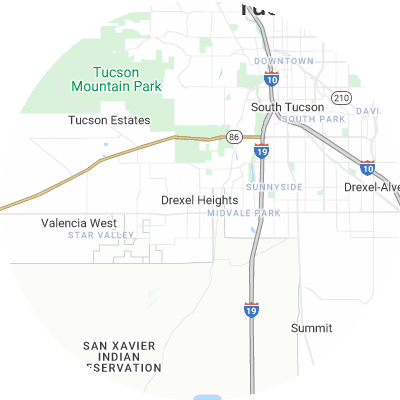
If you're like the typical American homeowner, over half of your energy bill (55%, per the Department of Energy) goes toward heating and cooling your home. In Drexel Heights, a lot of that energy use likely goes toward cooling off during the warm summers. In fact, Drexel Heights residents spend, on average, $150 a month cooling their homes.
Our list of the top HVAC companies in Drexel Heights can help you get your system into top shape, allowing you to save money while staying comfortable.
Prompt service delivery
Clear pricing policy
Informative resources
Reliable customer support
Free quote
Services Offered
Prompt service delivery
Reliable customer support
Free quote
Clear pricing policy
Informative resources
Services Offered
Reliable customer support
Prompt service delivery
Clear pricing policy
Free quote
Informative resources
Services Offered
Reliable customer support
Informative resources
Clear pricing policy
Free quote
Services Offered
Reliable customer support
Informative resources
Prompt service delivery
Free quote
Clear pricing policy
Services Offered
Informative resources
Reliable customer support
Free quote
Clear pricing policy
Services Offered
Informative resources
Clear pricing policy
Reliable customer support
Services Offered
Clear pricing policy
Informative resources
Reliable customer support
Free quote
Services Offered
Reliable customer support
Clear pricing policy
Informative resources
Prompt service delivery
Free quote
Services Offered
Prompt service delivery
Reliable customer support
Free quote
Informative resources
Clear pricing policy
Services Offered
Today's Homeowner looks at dozens of datapoints on hvac companies to come up with our data-driven rankings. It's not possible for a company to pay for preferential treatment in our rankings. We look at the following key factors in determining who should top our list:
A malfunctioning or aging HVAC system probably needs attention from a professional who can make fixes or install a new unit. Look out for these common signs that your HVAC needs service:
These HVAC red flags indicate that you should have your system evaluated. A local provider can complete an inspection, diagnose problems, and advise you whether you should repair or replace your HVAC unit.
HVAC installation or maintenance prices change depending on your system. Common HVAC unit varieties include the following:
HVAC maintenance prices vary based on the specific services needed. HVAC systems can be complex and potentially require several different services. Price ranges for typical jobs are as follows:
| HVAC Unit Type | Cost | |
|---|---|---|
| Split | $1,883-$4,801 | |
| Hybrid Split | $3,816-$7,031 | |
| Heat Pump | $2,955-$30,110 | |
| Packaged Heating and Air | $247-$412 |
Taking care of necessary HVAC repairs and replacements when needed is crucial, but can be costly. Luckily, there are steps you can take to minimize wear and tear over time on your system.
| Service | Cost | |
|---|---|---|
| Filter Replacement | $62-$165 | |
| Condensor Cleaning | $1,236-$3,709 | |
| Thermostat Repair | $82-$206 | |
| Ductwork Cleaning | $396-$989 |
Knowing what to look for in an HVAC company is crucial for a successful project. Partnering with an experienced, licensed contractor can give you peace of mind and ensure your system provides reliable air conditioning and heating for your home.
Contact at least three HVAC contractors for quotes. Explain your issues and schedule an in-person inspection if possible. Compare providers' diagnoses, suggested repairs, estimated costs, timeframes, and warranties. Avoid companies that pressure you or demand upfront payment.
Look for an HVAC company that employs qualified technicians with the necessary licensure and training. HVAC contractors in all states need to obtain a Section 608 Technician Certification from the Environmental Protection Agency (EPA). This certification is mandatory for any individual who helps "maintain, service, repair or dispose of equipment that could release refrigerants into the atmosphere." An individual must pass an exam (the type of exam depends on what kind of equipment they intend to work with) to be certified by the EPA. All other licensing requirements are handled on a state-by-state basis.
In Arizona, HVAC contractors may have one of several types of dual contractor or specialty residential licenses from the Arizona Registrar of Contractors, depending on which HVAC components they work on. Generally, four years of hands-on experience is required to apply for a license, and contractors must also be bonded. Also look at a company's reviews and complaints on sites such as Yelp, the Better Business Bureau (BBB), and Google Reviews. Pick a company with great feedback and good customer testimonials.
Always make sure you know what a company’s process looks like. When HVAC repairs are needed, ask your provider to list which parts require replacement and explain why. Confirm that your technician will clean and test the full system at the end of the job to verify proper operation. When replacing your HVAC, ask your installation company to provide details on the new estimated installation time, features, model, energy efficiency, and brand. Before signing a contract, make sure you understand the process your provider will use to select the correctly sized system for your home and what the cost will be.
Trustworthy HVAC companies back their work with warranties. Look at warranties from different companies, bearing in mind that more comprehensive coverage is better. Look for the provider that offers the most coverage for a fair price.
Always get estimates for HVAC service in writing before committing to a provider. An itemized quote should cover both materials and labor. Make sure you agree to all terms before signing a contract.
Generally, you should have your HVAC system inspected twice a year. After an inspection, your HVAC technician will tell you what, if any, services are needed. You should also have your system inspected and serviced if you notice any new issues, such as strange noises, leaks, or unusual smells. If you have ductwork in your home, it should be serviced every few years.
The best times to have an HVAC inspection are during the spring and fall. Technicians are often less busy during these times, which makes it easier to get an appointment. This also ensures that your system is ready for the summer and winter, when it typically gets the most use.
You can save energy during the summer by reducing the amount of power your HVAC system uses to keep your home cool. Set your thermostat as close to the outside temperature as you can, and avoid making drastic changes in temperature all at once. Keep your roof in good shape and seal any window or door leaks to avoid letting cool air escape. Similarly, ensure that your attic is well ventilated to avoid trapping excess heat in your home.
It takes roughly one to three days to have an HVAC system installed or replaced. If you only need a furnace or a single air conditioning unit, this may take anywhere from a few hours up to two days. This timeline will be influenced by the size of your home, the accessibility of your system, and any new issues your technician discovers.
Typically, HVAC financing is offered through a third-party lender. If your HVAC company doesn't offer these options, you could consider taking out a loan on your own. Be sure to talk to your HVAC company and a financial advisor to find out what options are available to you and appropriate for your situation.
There are several ways you can make your HVAC system more energy-efficient: