


Peek into a suburban backyard or glance up at a city rooftop, and you’re likely to spot at least one column of white boxes stacked in a sunny corner. They seem quite enough—at first. Get a little closer, however, and you’ll soon see the truth. Each box is a beehive, teeming with industrious colonies that zip to and from the boxes, producing gallons of honey one sweet drop at a time.
Humans have been keeping bees for thousands of years, enjoying a mutually beneficial relationship. Now, as beekeeping grows in popularity, it’s become much more common for beginners to take up the hobby. My own foray into apiculture began in 2011, and it’s been a wonderful experience—punctuated, of course, with a few stings. No one ever said learning was easy.
If you’re interested in keeping bees, harvesting honey, and increasing the number of these vital pollinators in your garden, the following guide is an excellent place to begin.

Before you begin beekeeping
1. Check with your city and your neighbors
Honeybees are misunderstood insects. Despite their many benefits, the idea of keeping a colony in your backyard may not sit well with the neighbors. Before you begin, check your city’s local zoning ordinances. Depending on where you live and what the laws look like, there will be any number of codes you’ll have to follow.
For example, your lot may need to be a certain size, there could be a cap on how many hives are permissible, and certain species, such as Africanized bees, may be illegal (the gentler Italian honey bees are usually preferred, by both municipalities and beekeepers). Following these rules will go a long way toward winning the goodwill of your neighbors, as will the occasional jar of honey.
2. Pick the right spot
Once you understand the ordinances related to urban beekeeping and are able to satisfy them, it’s time to choose a spot for your hives. The ideal location is one that’s easily accessible so you can inspect them regularly. Pointing the hives toward the southeast will get the bees buzzing earlier in the day, and a spot with dappled sunlight rather than full sun will help keep the hive cool during hot summer days.
If you live in a city and plan to place your bees on a rooftop, use ratchet straps to keep the hives secure in higher winds, and never put beehives on a fire escape.

Urban beekeeping startup costs
While beekeeping doesn’t have many ongoing expenses (hives can be reused for many years, and a healthy colony won’t require much from its keeper) there is a short list of startup costs to take into account. Apart from the cost of building or buying a hive, you can expect to spend around $100 to get started with beekeeping.
To give your bees the best chance of survival and to make beekeeping more pleasant, you’ll need the following items.
A beekeeping jacket ($40)
A full suit isn’t necessary as long as your beekeeping jacket has a hooded veil. While some experienced beekeepers eschew protection, beginners will want to make this investment.
Leather gloves ($15)
Inspecting the hives requires lifting frames from the boxes, which angers the bees. Keep the vulnerable skin of your hands safe with long gloves, usually made from supple goat skin.
A smoker ($40)
Short and squat, a bee smoker emits cool, white smoke, which masks the bees’ pheromones and keeps them calm as you work the hive.
A hive tool ($12)
A hive tool is a small crowbar that helps you pry the frames apart, lift them from the hive, and scrap away excess wax and propolis.
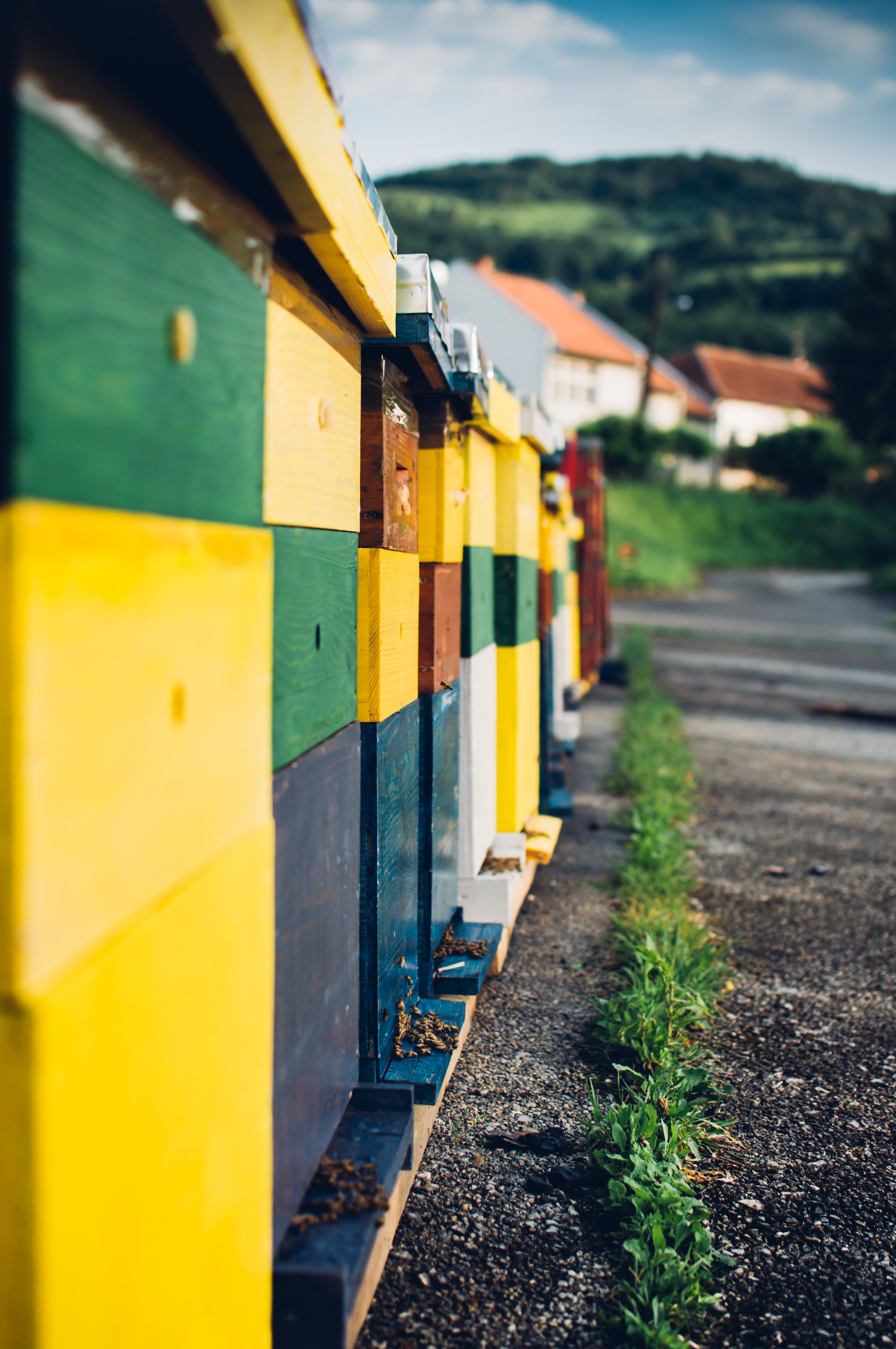

LEFT Langstroth hives
RIGHT A mix of langstroth (vertical) hives and top bar (horizontal) hives
Two types of beehives
When it comes to your actual hives, you have two options. Both offer benefits and challenges, and hives can thrive in either one. The choice is up to you.
Langstroth hives
Langstroth hives are basically stacked boxes. As the hive grows, the beekeeper simply adds another box to the tower. Each box contains ten frames, which hang in the box like files in a cabinet. Langstroth hives are very common—most beekeepers use them, so information, equipment, and advice are easy to find. If you’re joining a local beekeeping club, most members will have Langstroth hives.
The downside of Langstroth hives is that the boxes become very heavy. At the height of summer, these beehives can weigh up to 100 pounds each. To inspect the hives at the bottom of the tower, you’ll have to lift and move the ones on top, which can be difficult.
Top bar hives
Top bar hives are shaped typically long and rectangular and allow for horizontal beekeeping as opposed to Langstroth’s vertical system. As the hive grows, more frames are added to the back of the hive, so bees build out rather than up. The design is very simple and is considered less invasive, which the bees appreciate. Top bar hives also don’t require frames. Empty bars are placed in the hive, and the bees build comb from scratch, just as they would in the wild.
Top bar hives present their own challenges. Because there are no frames, the comb will be a bit more fragile and can break apart during inspections if you aren’t careful. While fairly cheap to build (you can make your own for about $100) there are no standard measurements, and many recommended measurements are too small. This is an easy mistake to make, especially for beginners.
Read also: Summer Lawn Management Guide
Building vs. buying beehives
If you’re brand new to beekeeping, it’s best to buy your hives rather than go the DIY route. While buying will be more expensive (a Langstroth hive averages about $100, and ready-to-go top bar hives are around $300), building a beehive at home requires a level of understanding that only comes with time and experience.
The better you know your bees—what they prefer, how they thrive, and the challenges they face in your unique location—the better your hives will be when you’re ready to build.

DIY vs. buying beehives
It’s best to buy your beehives rather than go the DIY route to ensure your structures are high quality and won’t fail.
DIY
- Building is more affordable—With the right wood, you can build a beehive for less than $100
- However, building requires a level of understanding that only comes with time and experience, so if built improperly, a beehive can hinder a bee’s growth and honey production
HIRE
- You can find high-quality Langstroth hives online for around $100
- Buying a beehive eliminates personal error and saves you time from having to source wood and meticulously build the structure yourself
Best practices for urban beekeeping
Do: Get your bees from an approved dealer. This ensures your bees will arrive healthy and strong, and that they were raised under humane and responsible circumstances.
Don’t: Buy used supplies from someone else. They can contain diseases that might be passed on to your bees. Always buy new, even if the price tag is a bit higher.
Do: Join a local beekeeping group. These groups will provide invaluable insight and education as you learn the ins and outs of keeping bees. They will also be able to share information unique to your area, which you’ll rarely find in a book or on a website.
Don’t: Neglect your bees. During the spring and summer, when the temperature is consistently above 70°F, it’s important to inspect your hives each week. Parasites, such as wax moths, can decimate the hive in days when left unchecked.
Do: Start with at least two colonies. While it might seem overwhelming to care for and keep two hives, multiple colonies will allow you to compare their progress and make adjustments as needed. There’s also the simple fact that beekeeping has a steep learning curve, and increasing your odds is never a bad thing.
Are you interested in learning about homesteading? If yes is the answer, explore our in-depth article that explains everything about homesteading.


